Not all fire extinguishers are the same — using the wrong type can make a fire worse. Learn which extinguisher to use for different fire classes in Kenya, plus maintenance and pricing.
Fire extinguishers are found in nearly every building in Kenya, yet surprisingly few people know which type to use on which kind of fire. Using the wrong extinguisher is not just ineffective — it can be genuinely dangerous. Spraying water on an electrical fire or a cooking oil fire, for example, can cause electrocution or a violent fireball.
This guide explains the different types of fire extinguishers available in Kenya, which fire classes each is designed for, and how to maintain them properly.
Understanding Fire Classes
Before choosing an extinguisher, you need to understand the classification of fires used in Kenya (based on European/ISO standards):
- Class A — fires involving ordinary combustible materials: wood, paper, textiles, cardboard, plastics.
- Class B — fires involving flammable liquids: petrol, diesel, paraffin, paint, solvents.
- Class C — fires involving flammable gases: LPG, natural gas, butane.
- Class D — fires involving combustible metals: magnesium, aluminium powder (rare in typical buildings).
- Class F (or Class K) — fires involving cooking oils and fats, typically in commercial kitchens.
- Electrical fires — not a separate class, but any fire involving live electrical equipment requires an extinguisher that does not conduct electricity.
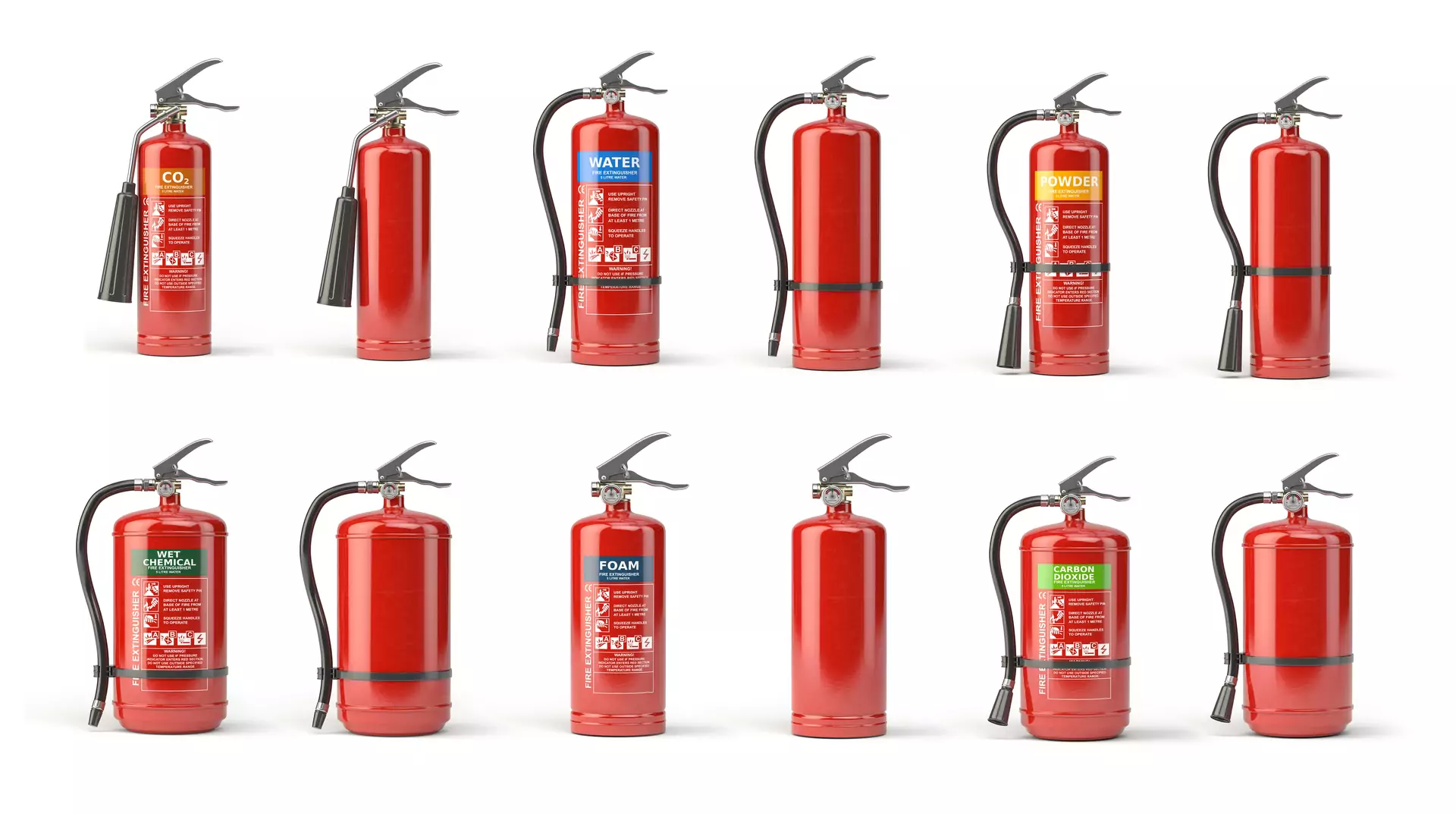
ABC Dry Powder Extinguisher
The ABC dry powder extinguisher is the most common type found in Kenyan homes, offices, and vehicles. It is versatile and effective on multiple fire classes.
- Suitable for: Class A, B, and C fires, plus electrical fires.
- How it works: The fine powder smothers the fire by interrupting the chemical reaction and coating the fuel surface.
- Advantages: Multi-purpose, widely available, effective on most common fire types.
- Disadvantages: Creates a cloud of powder that reduces visibility and can cause breathing difficulties in enclosed spaces. The powder residue can damage electronics and machinery. Not suitable for deep-fat fryer fires (Class F).
- Price in Kenya: KES 2,500–5,000 for a 6 kg unit; KES 4,500–8,000 for a 9 kg unit.
CO2 (Carbon Dioxide) Extinguisher
CO2 extinguishers are the preferred choice for electrical fires and environments with sensitive electronic equipment such as server rooms, data centres, and offices.
- Suitable for: Class B fires and electrical fires.
- How it works: Displaces oxygen around the fire, suffocating it. Also cools the fire with the extremely cold CO2 gas.
- Advantages: Leaves no residue — ideal for protecting electronics, documents, and clean environments. Non-conductive, so safe on live electrical equipment.
- Disadvantages: Not effective on Class A fires (paper, wood) as the fire can re-ignite once the CO2 disperses. Limited range — must be used relatively close to the fire. Risk of cold burns from the discharge horn.
- Price in Kenya: KES 5,000–9,000 for a 2 kg unit; KES 8,000–15,000 for a 5 kg unit.
Foam (AFFF) Extinguisher
Foam extinguishers are effective on both Class A and Class B fires, making them a good choice for workshops, garages, and warehouses where flammable liquids are present.
- Suitable for: Class A and B fires.
- How it works: The aqueous film-forming foam (AFFF) spreads over the burning liquid surface, cutting off the oxygen supply and preventing re-ignition. On Class A fires, the water content provides cooling.
- Advantages: Excellent on liquid fuel fires. Prevents re-ignition by sealing the surface. Also works well on ordinary combustibles.
- Disadvantages: Not safe on electrical fires (contains water). Not effective on cooking oil fires (Class F). The foam can be messy to clean up.
- Price in Kenya: KES 4,000–7,000 for a 6-litre unit; KES 6,000–10,000 for a 9-litre unit.
Water Extinguisher
Water extinguishers are the simplest and oldest type. They are effective on Class A fires only and are commonly found in schools, hotels, and office buildings in Kenya.
- Suitable for: Class A fires only (wood, paper, textiles).
- How it works: Water cools the burning material below its ignition temperature, extinguishing the fire.
- Advantages: Inexpensive and widely available. Effective cooling action on solid combustible materials. Environmentally friendly — no chemicals.
- Disadvantages: Dangerous on electrical fires (electrocution risk). Dangerous on flammable liquid fires (can spread the burning liquid). Dangerous on cooking oil fires (causes violent steam explosion).
- Price in Kenya: KES 3,000–5,000 for a 9-litre unit.
Wet Chemical Extinguisher
Wet chemical extinguishers are specifically designed for Class F fires — cooking oil and deep-fat fryer fires. They are essential in commercial kitchens across Kenya.
- Suitable for: Class F fires (cooking oils and fats). Also effective on Class A fires.
- How it works: The wet chemical agent reacts with the hot oil through a process called saponification, creating a soap-like layer that seals the surface and prevents re-ignition. The gentle spray pattern avoids splashing hot oil.
- Advantages: The only extinguisher type designed specifically for kitchen oil fires. Prevents re-ignition. Gentle application lance does not splash hot oil.
- Disadvantages: Not suitable for electrical fires. More expensive than other types. Limited to kitchen and food preparation environments.
- Price in Kenya: KES 6,000–12,000 for a 6-litre unit.
How to Choose the Right Extinguisher for Your Premises
The correct selection depends on the fire risks present in your specific environment:
- Office — ABC dry powder plus CO2 extinguishers near electrical equipment.
- Warehouse / workshop — ABC dry powder plus foam extinguishers near flammable liquid storage.
- Commercial kitchen / restaurant — wet chemical extinguisher near cooking stations, plus CO2 near electrical panels.
- Server room / data centre — CO2 extinguishers (to avoid damaging equipment).
- Home — a 2 kg ABC dry powder extinguisher is a practical all-round choice for most households.
Maintenance Requirements
Kenyan regulations require fire extinguishers to be maintained regularly:
- Monthly — visual inspection: check that the extinguisher is in its designated location, the pressure gauge is in the green zone, the pin and tamper seal are intact, and there is no visible damage.
- Annually — professional service by a certified technician, including weight check, pressure test, and replacement of any damaged components. A service tag is attached showing the date of service.
- Every 5 years — extended service including discharge test and internal examination.
- Every 10 years — hydrostatic pressure test or replacement of the cylinder.
At Lance Security, we supply all types of fire extinguishers and provide annual servicing contracts to keep your equipment compliant. Visit our online shop to browse fire extinguishers or request a quote for supply, installation, and maintenance tailored to your premises.
Tags