
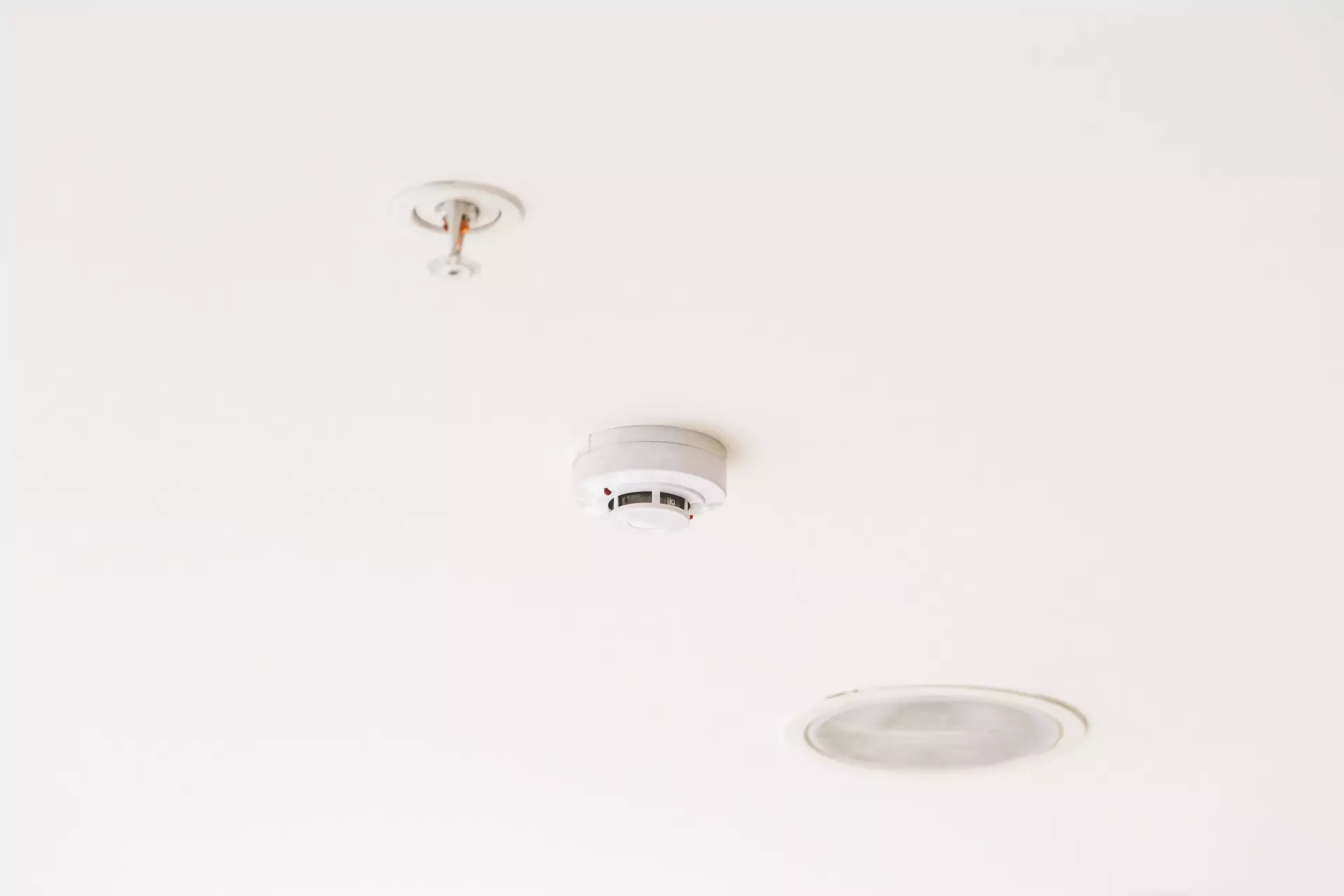
Smoke Detectors
Supply and installation of reliable smoke detectors for early fire warning in homes, offices, and commercial buildings.
Smoke detectors are the single most important fire safety device you can install. They provide the earliest possible warning of fire — often minutes before flames become visible — giving occupants the time they need to evacuate safely and emergency responders the chance to intervene before a small fire becomes a large one. Lance Security supplies and installs smoke detectors for homes, offices, retail spaces, warehouses, and institutional buildings across Kenya, from standalone battery-powered units for a single room to fully networked detectors integrated into building-wide fire alarm systems.
Types of Smoke Detectors
Optical (Photoelectric) Smoke Detectors
Optical detectors use a light source (LED or infrared) and a photosensitive sensor inside a detection chamber. Under normal conditions, the light beam does not reach the sensor. When smoke enters the chamber, particles scatter the light, redirecting it onto the sensor and triggering the alarm. Optical detectors are most effective at detecting slow, smouldering fires that produce large visible smoke particles — the most common fire type in offices, homes, and commercial buildings where paper, fabric, wood, and plastic are present. They are less prone to false alarms from cooking fumes than ionization detectors, making them the preferred choice for most indoor environments in Kenya.
Ionization Smoke Detectors
Ionization detectors contain a small amount of radioactive material (Americium-241) that ionizes the air inside the detection chamber, creating a small electrical current. When smoke enters, it disrupts the current, triggering the alarm. Ionization detectors are faster at detecting fast-flaming fires with small smoke particles — such as paper or flammable liquid fires. However, they are more susceptible to false alarms from cooking and steam and have been gradually replaced by optical and multi-sensor detectors in most modern applications.
Multi-Sensor Detectors
Multi-sensor detectors combine optical smoke sensing with heat sensing (and sometimes CO detection) in a single unit. By analysing multiple environmental parameters, they achieve faster response to a wider range of fire types while significantly reducing false alarms. Multi-sensor detectors represent the current best practice for new installations and are particularly valuable in challenging environments such as hotel bedrooms, hospital wards, and open-plan kitchens adjacent to living spaces.
Standalone vs Addressable Detectors
Standalone (Battery-Powered) Detectors
Standalone smoke detectors are self-contained units powered by a 9V battery or a sealed 10-year lithium battery. When the detector senses smoke, it sounds its built-in sounder. Standalone detectors require no wiring and can be installed in minutes, making them the simplest and most affordable option for homes, small rental units, and domestic staff quarters. Some models are interconnectable wirelessly — when one detector alarms, all linked units sound simultaneously, ensuring the alarm is heard throughout the house.
Addressable (System) Detectors
Addressable detectors are connected to a fire alarm control panel via a loop of fire-rated cable. Each detector has a unique address, allowing the panel to identify the exact location of a fire. Addressable detectors are used in commercial and institutional buildings where Kenya Building Code requires a managed fire alarm system with zone or point identification, monitoring centre connection, and documented maintenance records.
Placement Guidelines
Correct placement is just as important as the detector itself. A badly positioned smoke detector may not respond quickly enough — or may produce constant false alarms that lead occupants to disable it. We follow BS 5839-6 (domestic) and BS 5839-1 (commercial) placement guidelines, adapted for Kenyan building layouts:
- General rooms — Mount on the ceiling, at least 300 mm from any wall or light fitting. One detector covers approximately 60 square metres in rooms up to 10.5 metres wide.
- Hallways and corridors — A detector should be placed within 7.5 metres of every bedroom door. In long corridors, detectors are spaced no more than 15 metres apart.
- Kitchens — Use heat detectors rather than smoke detectors to avoid cooking-related false alarms. Optical smoke detectors should be placed outside the kitchen, in the adjacent hallway or dining area.
- Stairwells — A detector should protect the head of every staircase, as stairs act as chimneys that channel smoke upwards.
- Avoid — Do not install smoke detectors directly above stoves, in bathrooms, in dusty workshops, or in outdoor or semi-outdoor areas exposed to weather.
Kenya Regulations for Commercial Buildings
The Kenya Building Code and OSHA 2007 require automatic fire detection in commercial, industrial, and multi-occupancy residential buildings. County fire departments enforce these requirements through inspections and the fire safety certificate process. Key obligations include:
- Smoke detection in all general areas, corridors, and escape routes
- Heat detection in kitchens, plant rooms, and other special-hazard areas
- Manual call points at exits
- A fire alarm control panel in a location accessible to the fire brigade
- Regular testing (weekly sounder test, monthly detector function test, annual full service) with documented records available for inspection
Residential Recommendations
While Kenyan regulations for domestic premises are less prescriptive, the risk of fire at home is very real — cooking fires, electrical faults from aging wiring, and charcoal or gas jiko incidents are common. We strongly recommend that every Kenyan home has, at minimum:
- A smoke detector in every hallway serving bedrooms
- A smoke detector in every living room
- A heat detector in the kitchen
- Interconnected units so that an alarm anywhere in the home wakes everyone
For homes, standalone wireless detectors provide excellent protection at a very affordable price point in KES. Browse our range in the Lance Security shop or ask us to supply and install during your next service visit.
Maintenance: Testing, Cleaning, and Battery Replacement
A smoke detector that is not maintained is a smoke detector you cannot trust. Our recommended maintenance schedule:
- Weekly — Press the test button to verify the sounder works.
- Monthly — Trigger the detector with approved test aerosol or canned smoke to verify the sensing element responds.
- Six-monthly — Gently vacuum or blow out the detection chamber to remove dust and insects that accumulate in Kenya's environment and can cause false alarms or reduced sensitivity.
- Annually — Full professional service, including sensitivity measurement using calibrated test equipment and battery replacement (for 9V battery models).
- Every 10 years — Replace the detector entirely. Sensing elements degrade over time and a detector older than 10 years may not respond reliably.
Do not leave fire detection to chance. Request a free consultation and let Lance Security recommend and install the right smoke detectors for your home or business.
Get a Free Site Survey
No obligation. We visit, assess, and quote — free of charge.
Why Choose Lance Security
Certified Technicians
Fully trained professionals on every job.
Free Site Survey
No-obligation assessment before any quote.
Transparent Pricing
Clear KES pricing, no hidden costs.
Kenya-Wide Coverage
Serving all 47 counties reliably.
Warranty Included
Equipment & workmanship fully covered.
24/7 Support
Emergency callout available round-the-clock.
Service Details
- Mon–Fri 8am–6pm
- Saturday 8am–2pm
- Emergency 24/7
- Coverage All 47 counties
Protect What Matters Most
Our experts will visit your property, assess your security needs, and provide a tailored solution — completely free of charge.
Related Services
Explore more security solutions from Lance Security
Fire Alarm & Detection Systems
Design, supply, and installation of fire alarm and detection systems compliant with Kenyan safety standards.
Learn moreFire Suppression Systems
Automatic fire suppression systems including sprinklers, gas-based, and foam suppression for commercial and industrial buildings.
Learn moreFire Safety Training
Certified fire safety training courses for staff, including fire drills, extinguisher use, and emergency evacuation procedures.
Learn moreFire Safety Maintenance
Regular inspection and maintenance of fire safety equipment to ensure compliance and operational readiness at all times.
Learn moreFire Retardant Cables
Supply and installation of fire retardant cables that resist flame propagation, ideal for commercial and industrial wiring projects.
Learn moreFire Extinguisher Supply & Refilling
Supply, installation, annual servicing, and refilling of all fire extinguisher types for homes, offices, factories, and commercial buildings across Kenya.
Learn moreFire Safety Audits & DOSHS Compliance
Professional fire safety audits and DOSHS compliance inspections to meet Kenya's OSHA 2007 and Fire Risk Reduction Rules requirements.
Learn moreSprinkler System Design & Installation
Professional design, supply, and installation of automatic sprinkler systems for commercial, industrial, and residential buildings in Kenya.
Learn moreEmergency Lighting & Exit Signage
Design, supply, and installation of emergency lighting systems and illuminated fire exit signs for commercial and institutional buildings in Kenya.
Learn moreFire Hydrant & Hose Reel Systems
Design, supply, and installation of fire hydrant and hose reel systems for commercial, industrial, and multi-storey buildings in Kenya.
Learn moreKitchen Hood Suppression Systems
Supply and installation of wet chemical kitchen hood fire suppression systems for hotels, restaurants, hospitals, and commercial kitchens in Kenya.
Learn moreGas Suppression Systems (FM-200 & CO2)
Clean agent and CO2 gas suppression systems for server rooms, data centres, electrical rooms, and archives in Kenya.
Learn moreFire Safety Consultancy & Risk Assessment
Independent fire safety consultancy, fire risk assessments, fire strategy reports, and emergency evacuation planning for buildings across Kenya.
Learn more